

Diversity: the state of being different; a range; a variety
Subcultures of the Highly Sensitive Person
Definitions, Tasks & Challenges ©2005
By Jacquelyn Strickland, LPC
(Revised August 2020)
It was at 10th HSP Gathering Retreat™ in June of 2006 at Walker Creek Ranch, in Petaluma, California when I looked around the room and immediately sensed the connections and similarities we all shared as highly sensitive people.
Yet, it was also quite obvious how different we each were.
It was then on an afternoon walk when all the “HSP Subcultures” suddenly presented, or as some would say, were “downloaded” to me. These definitions came to me almost like in a dream. I think this was because at this particular gathering there were individuals who represented almost all of the different HSP Subcultures identified below. Other HSP Subculture definitions, tasks and challenges were added in the few years which followed.
HSP as a Cultural Diversity Issue?
Yes. The Merriam-Webster dictionary defines “subculture” as a group that has beliefs and behaviors that are different from the main groups within a culture or society.”
I have often viewed the neutral, genetically inherited trait of Sensory Processing Sensitivity (HSP) as a cultural diversity issue. Why? Because in the broadest sense, cultural diversity refers to a wide variety of groups and includes different coping strategies a group might utilize for adapting to certain life situations. (As most of us know, coping strategies, or an individual HSP self-care plan, is very important to we HSPs. )
Although we HSPs certainly do not all share the same beliefs, we share enough similar characteristics to make up 15-20% of the world’s population, and that is no coincidence.
The four characteristics all HSPs have in common have been synthesized, by Dr. Elaine Aron, into the acronym D.O.E.S.
D – Depth of Processing
O- Overstimulation
E- Emotional Intensity, Responsiveness and Empathy
S- Sensitive to Subtleties
For a more in-depth explanation of the D.O.E.S. you can go the Notes section from my FB page: HSP Gathering Retreats:
The HSP Way
I’ve found the “HSP Way” way of being happy, well-adjusted, and/or experiencing a greater sense of well-being is markedly different from mainstream America, or the other 80% of the population who do not identify as HSPs.
In fact, when attempting to live like the other 80% of the population in “mainstream America,” an HSP will most likely experience burn-out, illness, or struggle with self-esteem. Part of being an empowered HSP is learning to define success on our own terms and to find and create our own unique way of being in the world. Thus, part of honoring cultural diversity, including our HSP trait, is understanding that it is not the same as assimilation or social integration. It is also important to know that we do not to “being like others.”
Identifying with one of the HSP Subcultures
Of course, it is possible that many HSPs will fit into more than one (or several) of the HSP subcultures, or, perhaps, none at all. The HSP Subcultures shared below are a combination of our HSP genetic trait and our various personalities, which in most cases have been influenced, for better or worse, by our family of origin and other life experiences.
And, now in alphabetical order –
The HSP Subcultures
 The Anomalous HSP
A very small percentage of HSPs as defined by independent researcher, David Ritchey in The H.I.S.S. of the A.S.P.: Understanding The Anomalous Sensitive and Michael Jawer in The Sensitive Anatomy of Emotion (reviewed by Elaine Aron in the November 2010 issue of The Comfort Zone.
Challenges – Similar to the HSP Physical Reactor, except with more pronounced, and sometimes painful, reactions to external stimuli via the body’s senses, which if not carefully managed, may result in poor physical health with a variety of symptomatic illnesses.
Tasks: To begin (often) lifelong research to discover, understand, and implement action plans which protect and enhance your body’s unique physiological needs in order to maintain energetic boundaries, and good physical health.
The Calloused, Unrecognized HSP
The HSP who has either ignored their traits of high sensitivity or who were never given the gift of knowledge about the trait. May appear unfeeling, scornful or contemptuous, usually not capable of being in loving relationships. (Many of us might see our parents in this subculture.)
Challenges: Becoming knowledgeable about the trait of high sensitivity is a major breakthrough for the Calloused HSP.
Tasks: Avoiding becoming embittered, sick, dysfunctional, addicted to drugs or alcohol. Must be willing to find appropriate intervention to begin long process of healing.
The Caregivers and Guardians of Childhood, the Elderly, and the Dying
Those who find that teaching, guiding, and caring for children, the elderly, animals, and the dying come naturally. They have a unique ability to serve those with special needs.
Challenges: Finding support and structure to provide unique HSP-style care and instruction.
Tasks: Finding time away from giving to others; practicing self-care. Not giving as much that they are ultimately less helpful and poor role models. Teaching at a level appropriate to the situation.
The Core Issue HSP
The HSP from a traumatic, troubled, and sometimes abandoned childhood. May have suffered from some type of abuse, or felt abandoned, neglected, dominated, or used. Often suffer from chronic anxiety or depression.
Challenges: Finding and investigating the appropriate healing venue(s) whether that is therapy, medications, new environments, books so that healing and learning to integrate the HSP trait in a positive way can be accomplished.
Tasks: Reaching out for help, staying committed to the healing path, acknowledging there is a problem without feeling deep shame, and finding new kinds of support, friendship, and community as this healing progresses. Perhaps eventually their insight eventually with others having similar wounds.
Creative/Artistic HSP
Those HSPs who need to create and manifest their ideas or visions. The medium may be music, drama, art, ideas, books, poetry, painting, etc.
Challenges: Accepting, understanding, and honoring the creative process and finding a medium for this expression.
Tasks: Learning how to manifest creative urges, finding support, education, and time to create. Patience, perseverance, and developing self-confidence.
The Empath ( HSP )
The HSP who is not only affected by other’s moods, but can also experience other’s emotions as if they were their own. Not all HSPs are Empaths by the way, and Elaine Aron would prefer that we not equate the two because science has not yet researched the Empath.
Challenges: Becoming overwhelmed with too many emotions, not being able to determine why mood may shift without notice; learning to discern which emotions belong to them, and which belong to others.
Tasks: Becoming aware of when one’s mood is suddenly affected, determining the source; learning when to turn off empathic abilities; learning when to use empathic abilities as a service and when these abilities can be a hindrance to growth or connection with others in a meaningful way.

Judith Orloff, Ph.D. has written several books on the Empath, and she often combines the two. However, it is important to note that not all HSPs are empaths, and not all Empaths are HPSs.
The Empowered Priestly Advisor
Evidenced by energetic, purposeful and spiritual direction, activism or leadership in their lives. These could be the coaches, counselors, therapists, authors, spiritual leaders (especially if they are advocates for the HSP.)
Challenges: Can sometimes expect others to think like them; Taking on too many causes, overstimulation, if left unmanaged, can lead to burn-out.
Tasks: Finding support and like-minded individuals to work with. Avoiding burn out. Learning to accept small changes as progress. HSP self-care is extremely important to this group (as it is for all HSPs.)
Note: I love Elaine Aron’s definition of the Priestly Advisor, as written in The Highly Sensitive Person’s Workbook. She describes the priestly advisor role as one in which the HSP “teaches, counsels, advises, heals, keeps the history in words or art forms, envisions the future, thinks about the meaning of life and death, leads rituals, studies the subtleties of nature or law, and puts the brakes on the more impulsive warrior kings.”
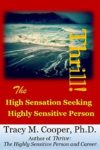
The High Sensation Seeking HSP
A minority within the HSP population, who is challenged to both: pause to check and to seek (novel) stimulation or adventure – not necessarily of a physical kind.
Challenges: May often feel torn — as if one foot is on the “accelerator” and the other on the “brake”. May become as easily overstimulated as under-stimulated.
Tasks: To recognize and respond to one’s physiological and psychological need to withdraw from too much stimulation, yet also recognize the need to seek novel, comforting, safe, and gently energizing options for stimulation.
Reference: Thrill, by Tracy Cooper, Ph.D.
 The Gifted HSP
The HSP who is unusually capable of deeply understanding, processing and synthesizing information from a wide variety of sources. Are ALL HSPs gifted? There are differing views on this … but since all HSPs do process information very deeply, on many different levels, they perhaps all have the capability of giftedness.
Challenges: To learn how to contain and manifest their unique gifts or risk the possibility of not being able to direct or manifest their gifts in the world. To learn when and how to share themselves with the world, and to understand that they may feel different from others.
Tasks: To become self-aware of “multiple levels of intelligence” and to self-identify which one’s they are drawn, so that they can choose to develop one or more of these for the joy it brings themselves, and to for the service it might offer the world.
The HSP Healer
Medical doctors and/or alternative healers, who are unusually intuitive using their gifts to offer healing to others. Alternative healing modalities may be Reiki, massage, medical intuitive, acupuncture, etc. May also be the more humble, reluctant healers such as Mother Teresa, the Dalai Lama
Challenges: Gaining the right education to express this gift. Avoiding burnout.
Tasks: Finding support and encouragement from like-minded individuals, and learning to trust these gifts and use them appropriately.
HSP Physical Reactor
HSPs who are unusually physically reactive to certain foods, noise, lights, stress. Physical reactions may include allergies, sweaty palms, nervousness, nausea, migraine headaches, chronic fatigue syndrome, fibromyalgia, “leaky gut” syndrome, etc.
Challenges: Finding or creating supportive environments that honor these physical sensitivities.
Tasks: Determining what triggers physical reactions and what alleviates any negative ones. Seeking compatible medical alternatives and knowledge to help manage and/or alleviate symptoms if at all possible. Accepting that not all people will understand these reactions.
Reserved Intellectual HSP
May be predominately introverts, although the Sensitive Extrovert is certainly not excluded from this group. Possess a keen intellect. May appear either shy or arrogant, but may not necessarily be that way. This subculture might be drawn to the sciences (more often the ‘thinking type’ of HSP) or to psychological, social or spiritual studies (more the ‘feeling type’.)
Challenges: Finding ways to share this gift with others and the world.
Tasks: Avoiding isolation; learning to accept others with different opinions or different mental styles; reaching out, becoming involved (a tiny bit more 🙂 ) outside their comfort zone.
The Social Justice/Activist HSP
Deeply moved to action by injustices whether upon people or the environment. Usually dedicated to many causes to improve human and earthly conditions…view new paradigms for a new world.
Challenges: Being overwhelmed with too many causes, not finding like-minded support groups to work with, feeling isolated, and perhaps feeling judgmental of others.
Tasks: To find support chose causes wisely, and realize that small changes do make a difference. Avoid burn out by taking time off to rejuvenate.
The HSP in Transition
The person who has just discovered the trait of high sensitivity. May feel relief about understanding why they are different but may feel alone, misunderstood, judged, or discouraged about themselves and their seeming limits.
Challenges: Acknowledging, reframing, and healing from the internalized negativity about the trait. Must learn to set boundaries and assert newly understood needs.
Tasks: Taking time to investigate the trait, set new boundaries, practice new coping skills.
The Wise, Saintly HSP
The Mother Teresa’s of the world, who feels a supreme devotion to a higher spiritual calling, or have achieved unusual levels of wisdom.
Challenges: Finding the precise expression for this calling.
Tasks: Avoiding isolation, burn out, psychological inflation. Practicing self-care.
HSP Subculture Questions to Ponder
I invite you to (confidentially) share your answers to these questions by sending them to Jacquelyn@hspgatheringretreats.
Which subculture do you most identify with?
What adjectives best describe you?
What ‘theme’ has been present for you throughout most of your life?
Is there a theme you remember from your childhood?
What brings you the most pleasure?
What are you driven’ to do?
Do you have a calling? A bliss?
What legacy would you like to leave to the world?
What challenges do you face?
What tasks do you need to accomplish?
What are your gifts to the world?
What is your Myers Briggs type, if know?
What is your Enneagram type, if known?
Copyrighted material. Use only with permission by Jacquelyn Strickland, Licensed Professional Counselor, LifeWorks, for Highly Sensitive People, www.lifeworkshelp.com ; jacquelyn@hspgatheringretreats.com
Crikey! I am some of all of these! On top I have Chronic Central Pain which is caused by an oversensitised Central nervous system “CNS”. This doesn’t just cause severe incurable physical pain but greater emotional sensitivity and emotional pain because the CNS cannot tell the difference between the physical and the mental/emotional. Before I got the pain which was triggered by an accident I had used ” social justice” in that I was a successful journalist, then “care” I trained as a child psychotherapist. Both required synthesising multiple factors to solve problems. So I’ve had an unusual journey in that not only am I part of the post war generation who live with their parents war trauma (an underestimated condition – trauma passes down generations) I have always had to use my intuition and problem solving abilities (successfully in creative ways, I was lucky) and then experienced my self becoming even more sensitive to the point where it sabotages my life. The management of chronic pain is by lifestyle more than anything else: quiet periods are crucial, avoiding overwhelm and self calming the CNS.
Hello Rachel, “Crikey!” I love that word, it is new to me .. 🙂 You are not the first to identify with several different HSP Subcultures, so
it is not surprising to be a social justice advocate, a healer, caregiver, HSP in transition, etc. And yes, I agree, generational trauma is an
unrecognized type of trauma, one that is seldom discussed,but so in need of healing from. Managing chronic pain as an HSP must be incredibly challenging and difficult. It seems
you have been forced to learn extreme self-care measures .. I hope you can continue to find peace and comfort through it all.
I am so glad I read this article! It’s such a relief to see more research and understanding on the subject of sensitivity, because to me, that’s an indicator of hope for the planet. I would go so far as to say that the “Priestly Adviser” role in our society is critical. I think of the human race as one big organism, and every human being has a cellular duty to the whole. If this organism had no active sensory cells, the brain would never receive the depth of the messages that Sensitives are designed to detect. Think of all the damage an organism can do without the balance-and-check system of taking cues from the body: doing any number of things regardless of consequences to physical health.
During this “Shift” that more and more are referring to, the balance between the dualities of masculine & feminine, mind & body, etc are trying to find resolve. Many believe that the shift is bringing more of the feminine earthly emobodied energy into consciousness, which is why I believe that HSP’s need to manifest our truths and take our empowered place in this culture. I believe each of us Sensitives is a little different, specifically attuned to particular environment, cause, role, duty, etc, but that our common ground unites us like a giant nervous system.
It took me a long time to find a career (in the arts) which I could truly care about, support myself and balance the demands of work with my physiological set of special needs. I do best living alone so that I can control the amount of synthetic chemicals, fragrances in my environment. I’ve explored an array of natural supplements for anxiety, sleep, chronic pain and mostly stay away from pharmaceutical medications. I still have really frustrating days, struggling with what I’d call empathic contagions (picking up other people’s crap), or depression about the world, my own alienation/loneliness, etc but have so much more life-affirming perspective thanks to the work of Dr’s Aron. I fought myself for so long, trust me: it’s so worth finding a way to embrace yourself for all that you are.
Dear Amelia,
Thanks for your thoughtful reply … I love what you wrote here — and I couldn’t agree more:
“…I believe that HSP’s need to manifest our truths and take our empowered place in this culture. I believe each of us Sensitives is a little different, specifically attuned to particular environment, cause, role, duty, etc, but that our common ground unites us like a giant nervous system…”
I agree, we each have a unique journey to discover, enhance, and create our own unique “HSP Owner’s Manual” in order to thrive in this world. Bravo to you.
your valuable observations are the help all HSPs need to practice self empathy and stay out of judgmentalism. One size does not fit all . We don’t need to agree to disagree because each supports all. Isn’t it grand?
Yes, Nancy … it is grand … and it is also quite freeing to realize that “indeed, one size does not fit all.” Thanks for chiming in. 🙂